20% Project Blog Post 6

Throughout this project I have learned and reflected on many things. Having a fun, interactive classroom is so important in keeping students engaged with what they are learning. It also makes them excited to learn and eager to increase or improve their knowledge on a certain topic. I do believe that there is tremendous value in using Pinterest to seek out ideas to implement in your classroom, it is just important to try them out yourself first. You need to know if the activity or game will benefit your students and your style of teaching. As the teacher, you know the atmosphere of your classroom the best and ultimately choose whether or not an activity would be beneficial.

I also believe Pinterest is a great place to turn to if you need ideas for games that target different learning styles. Not every student learns the same way, so you need to address the visual, auditory, and physical styles of learning. Pinterest offers such a vast network of ideas because people from all different backgrounds and all over the world post on it. Everyone has their own style so there are many unique ‘Pins’ available to find.

Personally, this project has helped me see the important value of an engaging and interactive classroom. It is so important for students and teachers to have strong relationships between each other and be able to openly communicate about anything. One way to help this it to implement interactive ways of teaching in the classroom. If a teacher establishes an interactive and open relationship with a student, the student is more likely to feel comfortable asking questions. This can further improve their academic skills if they ask questions about topics that confuse them and increase their personal communication skills. This was personally a beneficial topic to research and evaluate so I could improve my own knowledge about the importance of interactive classrooms.

20% Project Blog Post 5

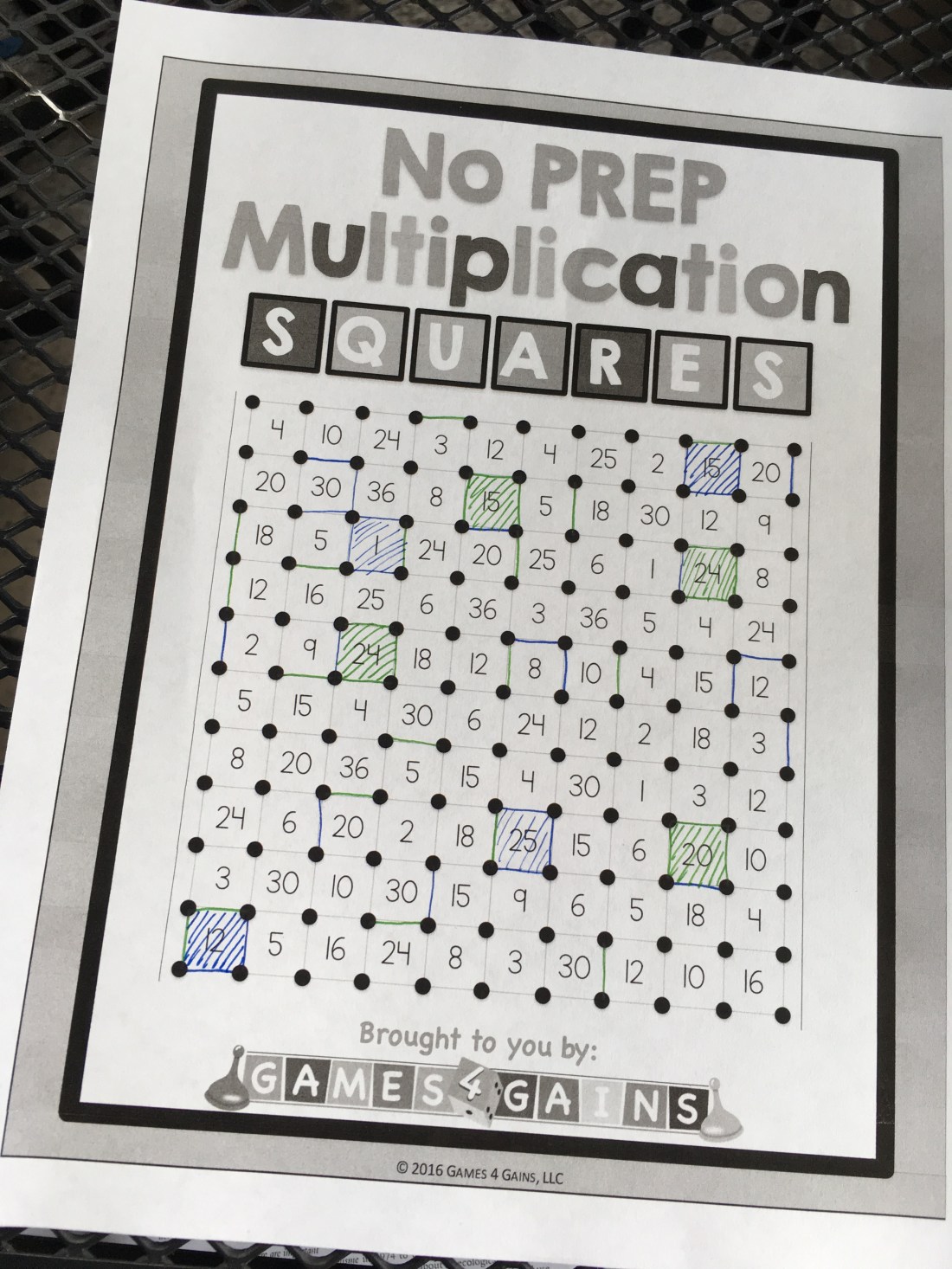
The last ‘Pin’ I recreated is called the “Multiplication Squares Game”. The goal of this game is to improve and practice students’ multiplication skills. To begin, you need an activity sheet and a set of dice. The activity sheet has a bunch of dots on it to play the ‘squares game’, with numbers in the middle of the dots. The numbers represent all the possible products of multiplying the numbers of two dice together.

Two-white-dice-lea-bohm-576729-unsplash-1-800x600

To perform the activity, you should split the students up into pairs and give them each a different color marker. The first student must roll the dice and multiply the numbers on the face of each die together. The student then must look for the product of their two numbers on the activity sheet and connect two of the dots around that number to form part of the square. The student who connects the fourth line to create a square gets to use their marker to color in the square. Whoever creates the most squares wins the game.

IMG_9597

While it may seem it is just a game of luck, there is also an element of strategy. Each of the products are listed multiple times on the game board so the students must strategize where they choose to place their lines to maximize the amount of squares they complete. This encourages forward thinking and increases the ability to be able to think ahead and know how your current action may affect one in the future.

This activity may not be very beneficial for the classroom because it could become very repetitive. There are only so many possible combinations of multiplication equations with the numbers one through six, so it may not be that valuable for students. One positive, though, could be that it is easy to prepare as a quick, last minute review activity.

https://games4gains.com/blogs/teaching-ideas/multiplication-squares-game

Stop Motion Animation Video Reflection

The topic of our stop motion animation video is ‘Photosynthesis’. It describes how photosynthesis and cellular respiration work together to form a cycle which repeats over and over again! It is targeted for upper elementary or middle school aged students and meets the standard “SB1: Biology ‘Patterns in living systems’”. Our video helps students understand the concept of photosynthesis and its importance to all living things because there are step by step pictures showing each important step. To achieve this, we drew out the steps of photosynthesis and took continuous pictures to make the video. Our creativity is shown through the different drawings we did and the fact that we decided to use a whiteboard rather then the suggested use of clay or paper figures. I value the video because I had to personally put in the work to combine the pictures, music, and narration to create it. I think I benefit the most because I saw the video come to life from a bunch of different pieces and I put a lot of effort into the process of making the final video. If you are creating a video of your own, I would advise you to not be afraid to try multiple things before you find one idea that works. It is also important to stretch your imagination and input your personal creativity wherever possible. 

20% Project Blog Post 4

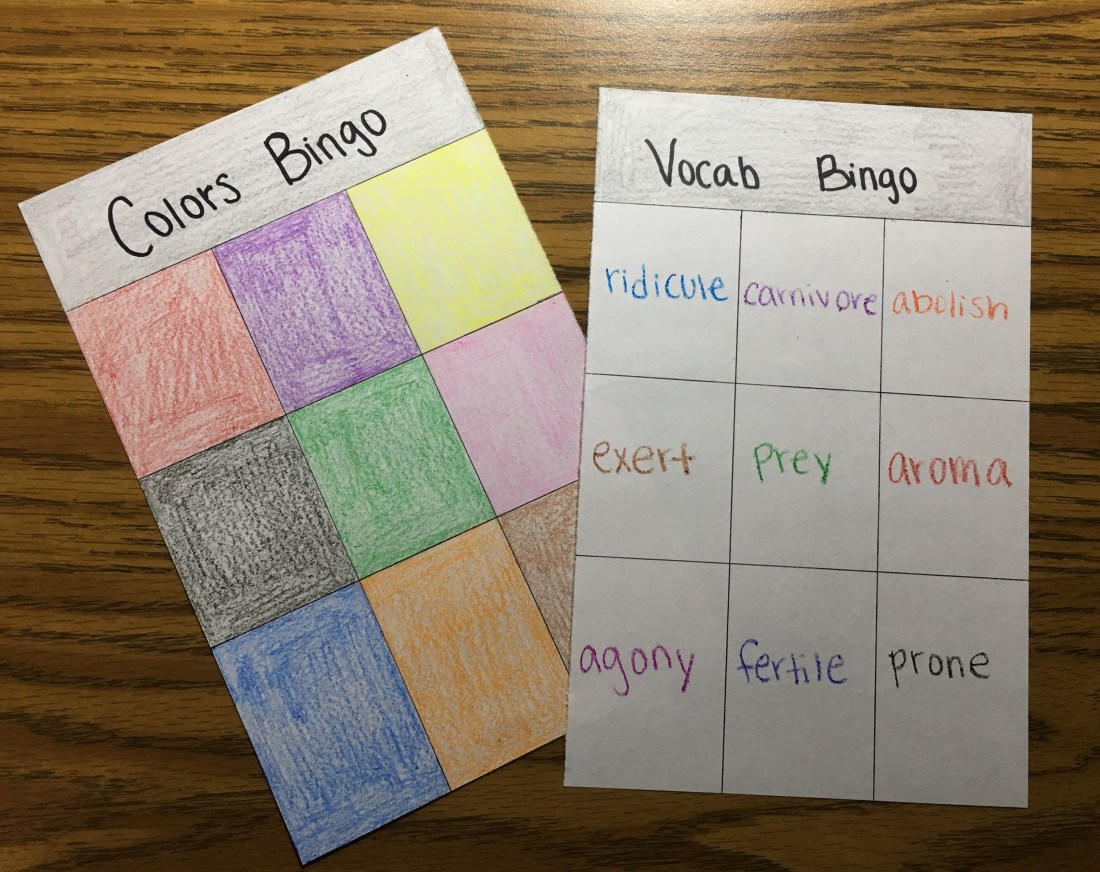
The next ‘Pin’ I recreated is a “Bingo Colors” game. The purpose of the game is to help children learn their colors in a fun, interactive way. To begin, you must create the bingo cards. Divide each card into nine squares and color them all different colors and variations.

IMG_9526

To play the game, instead of calling out “B 12”, you will call out a color. For instance, if you call out “Pink”, each student who has a pink square on their board should cover it with a token. The idea, though, is that they have to know what the color looks like when you call it out to know where to put the token. I would suggest this game is targeted for preschool aged children as its concept is very basic.

There are ways you may adapt it for older aged children. For example, I also made a “Vocabulary Bingo” game. Instead of filling the boxes with colors, I wrote different vocabulary words. In this case, you would read out a definition, such as “A distinctive, usually pleasant smell”, and the student would put their token on the word “Aroma”. In this variation, the student must know the definition of all the words on their card to be able to match the given definition to a word. You could also use this game idea for many different subjects in school. For mathematics, you could make a “Multiplication Bingo” where the answers to multiplication equations you read aloud are written in the boxes. For science, you could create a “Periodic Table of the Elements Bingo” where you read out the name of an element and their symbol is written in the boxes on the card. You could also modify the game for history, grammar, or foreign languages.

Overall, I think the game could be useful in a classroom setting to fill time. It is beneficial because it targets auditory and visual learners, but it may not be good to implement as a main source of instruction. The game could be finished quickly because there are not many boxes and students may get bored. You will need to gauge whether or not you think your students are gaining anything from the activity if you choose to implement it often.

https://www.funwithmama.com/printable-bingo-colors/

20% Project Blog Post 3

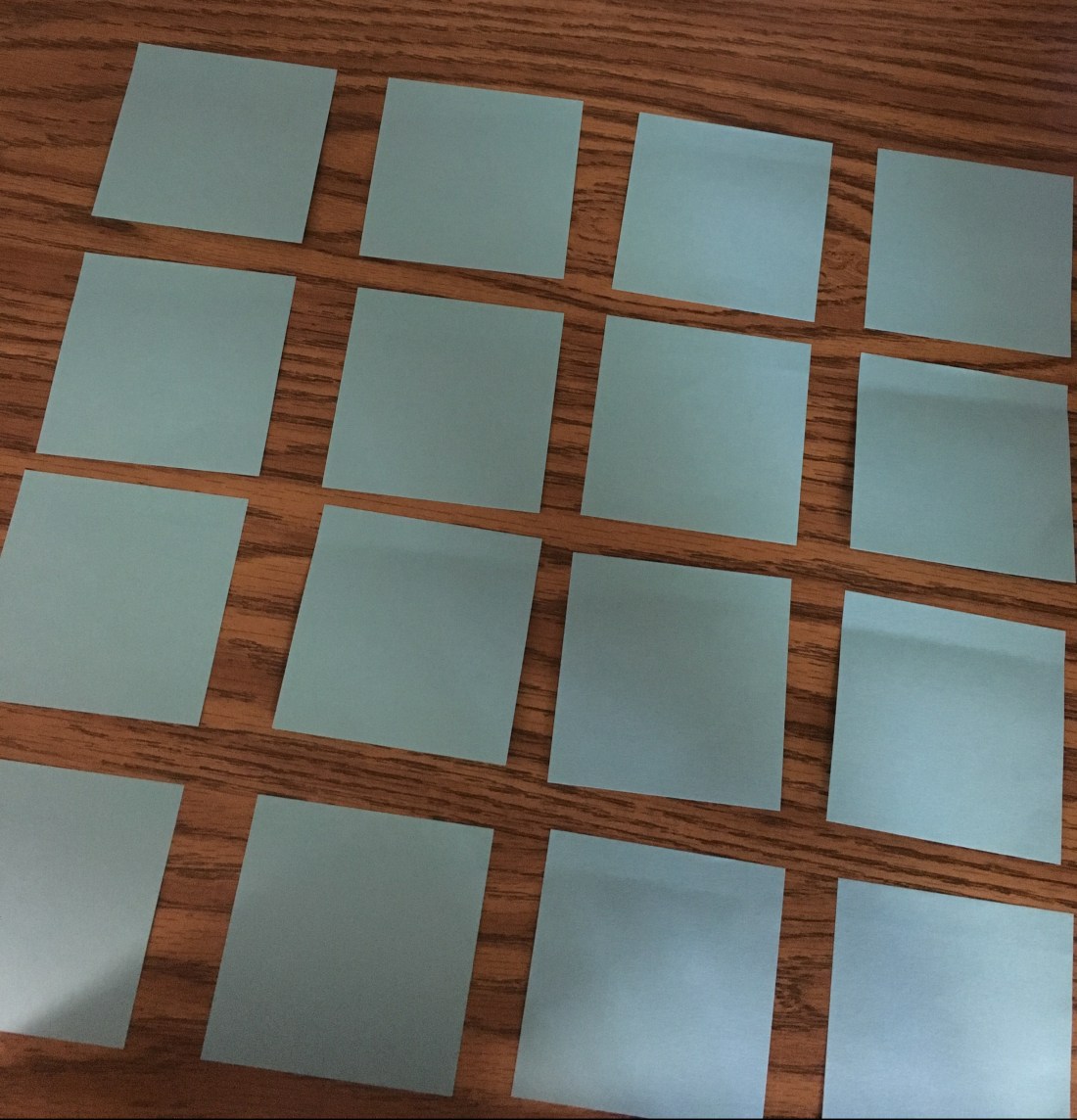
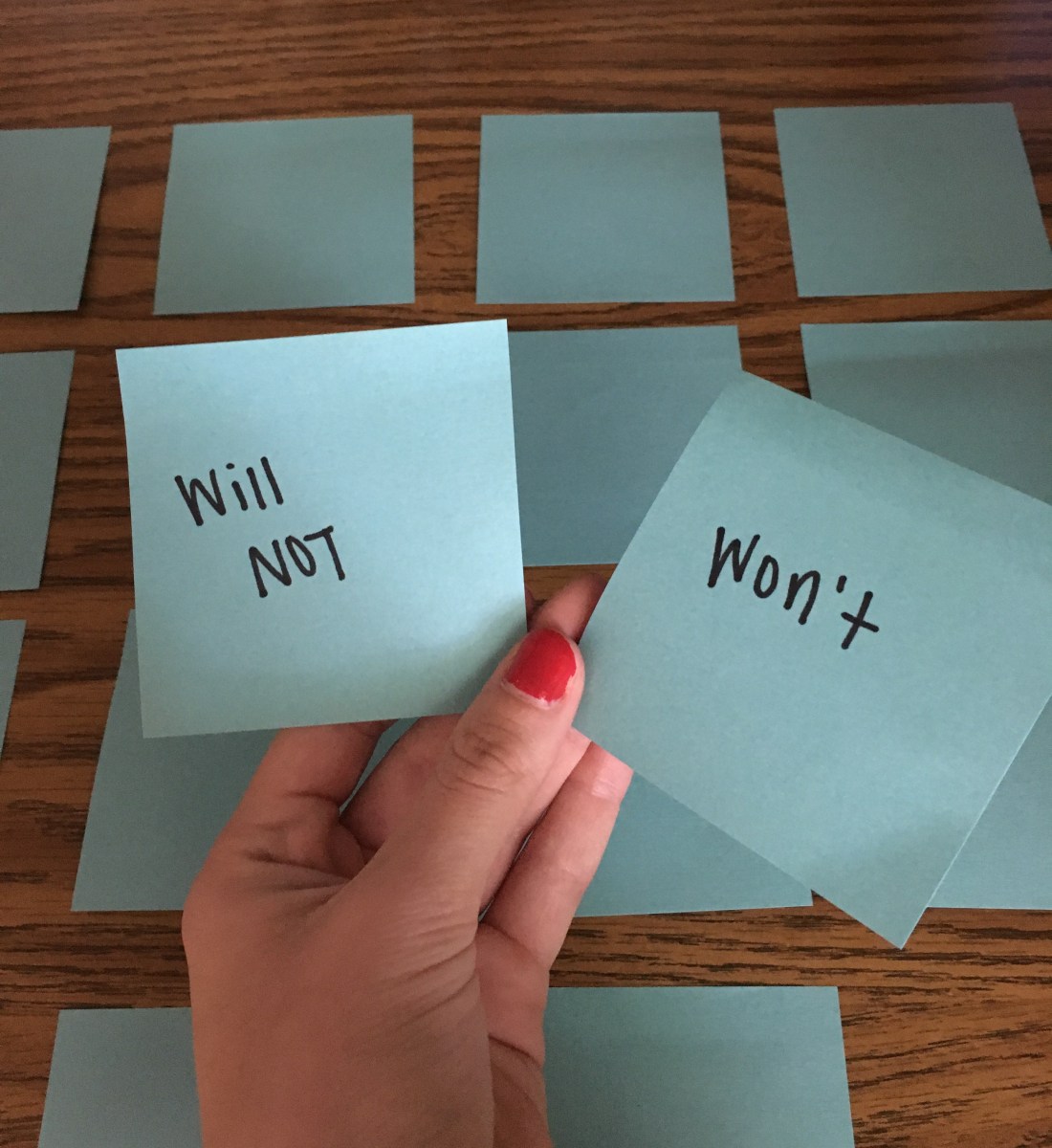
The next ‘Pin’ I recreated is a “Contractions Memory Game”. The purpose of this activity is to help younger elementary students improve their grammar. Before you begin, you need to decide how many contractions you are going to include in the game so you know how many cards to prepare. Once you have decided the amount, obtain two cards or pieces of paper per contraction you are going to use. On one card, write the contraction, for example, ‘won’t’. On the other card, write the two words that make the contraction, in this case, ‘will not’. As an option, you can also laminate these cards so they last longer and are not easily torn. To set up the game, mix up the cards and then line them up in a rectangle or square shape on a table or the ground.

img_9426.jpg

To play, flip over two cards, one at a time. After the student picks two, they have to decide if the cards match, this is where the grammar skills come into play. If they match each other, tell the student to set them aside. If not, the student must put them back down and someone else can take a turn. The goal is to try match all the cards, or contractions, while also activating the memory senses in your brain. You want to try to remember where you placed each card after you put it back so you can find the correct match next time.

IMG_9427

While this is a very simple game, it has many benefits. Memorization trains and challenges your brain to remember things. Actively exercising your brain in this way improves learning and cognitive abilities. The student is also engaged in practicing grammatical skills rather than just reading from a textbook. Since it is not very intensive, this activity may good to implement as a time filler or review game in the classroom.

https://www.schooltimesnippets.com/2015/08/superhero-contractions-memory-game.html

20% Project Blog Post 2

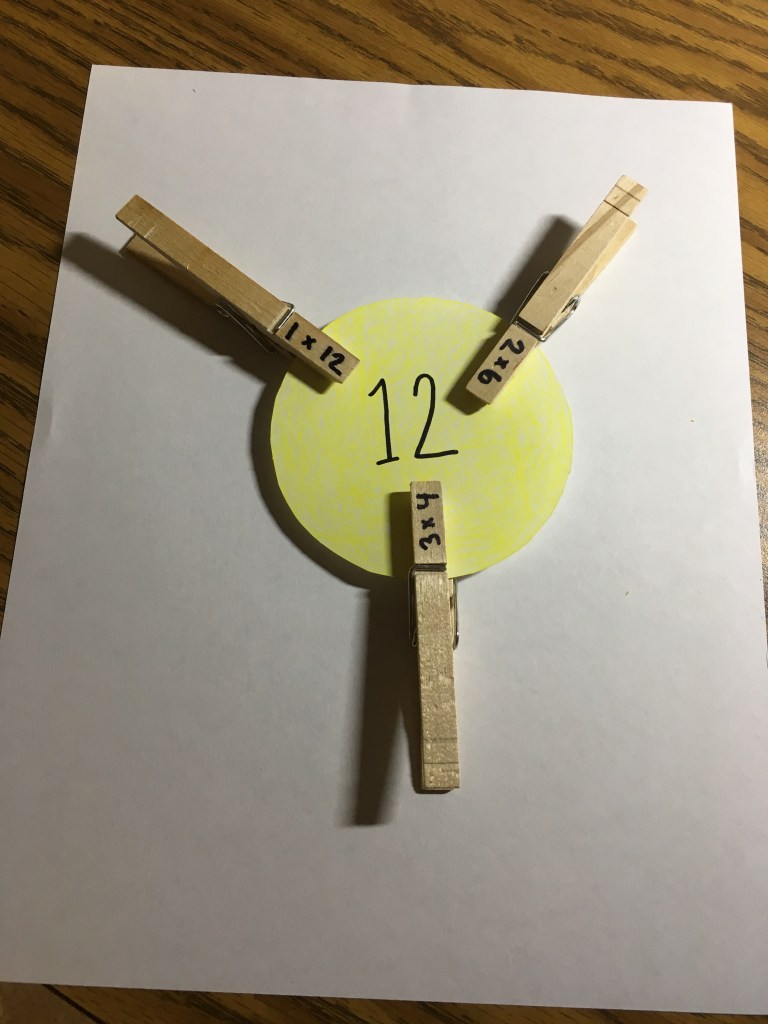
The first ‘Pin’ I am recreating is a “Fact Families Addition Activity”. This activity is specifically focused on building mathematical skills in a fun, interactive way. The set-up process is very simple. All you need is some yellow paper, clothespins, and a sharpie. You will cut the yellow paper in circles and write different numbers on each circle, representing the ‘answer’. Then you will write out each possible way to add two numbers together to get that answer and write them each on the clothespins, representing the ‘equations’.

I think this activity could be very beneficial for teachers in lower elementary ages to assist in teaching addition. This could be an individual or team game. You could let each student individually build a ‘sun’ as they practice their addition, or you could break up the class in groups, give each student a clothespin, and encourage them to work together to complete a ‘sun’. This activates visual and physical styles of learning. Visually, students are able to see which different sets of numbers add up to the same sum while also being physically engaged with the activity through the task of clipping clothespins onto the ‘suns’.

This game could also be adapted slightly to be done on a larger scale. Teachers could make large circles of numbers and post them on the walls all around the classroom and have students race with their clothespins to see which team completes their ‘sun’ first. This gets the students active and increases their heart rate and engagement with the activity. If students are more engaged, they are more likely to learn from the activity. This “Fact Families Addition Activity” could also be modified to target older elementary aged students by turning it into a “Fact Families Multiplication Activity”. Instead of writing addition equations on each clothespin, you could write multiplication equations.

IMG_9336

Overall, I think this is an awesome ‘Pin’ and could be very valuable in the classroom. It is not too hard to prepare, can be adapted to any age group, and can be applied on a small or large scale. It improves mathematical skills while also increasing communication and team work skills between classmates. Hope you can benefit from this idea!

20% Project Blog Post 1

Have you ever been scrolling through Pinterest and thought to yourself, “I wonder if that really works?” Well I am here to let you know!! In my EDIT 2000 class here at UGA, we have been assigned a 20% Project. We were given free rein to choose our own topic and will be working on this project throughout the semester, giving it ‘20% of our time’. For my 20% Project, I am going to be recreating four ‘Pinterest-Inspired’ educational games or activities to see if they could be beneficial for teachers to implement in their classrooms. I am going to consider things such as difficulty level, time required for completion, set up/clean-up process, what learning styles it targets, and if students could learn something educational from it. I believe that it is super important for teachers to apply varied methods of teaching in their classrooms.

I am an intended Communication Sciences and Disorders major with hopes of becoming a Speech Pathologist one day and have a very special place in my heart for students with special needs. I have seen firsthand how children can be ridiculed and made fun of for certain disabilities or daily challenges they may have to face. One of the hardest challenges I have seen kids face is not being able to speak clearly, unable to express themselves. Finding creative, new ways to increase learning and development in the classroom is so important, and not just for special needs students. All students have their own unique way of learning and teachers need to be aware of this.

Often teachers will turn to Pinterest to find exciting and innovative activities to implement in their classroom but run into challenges such as not having the right supplies, not knowing the appropriate age group for the activity, or being unaware of the educational value of the activity. Through this project, I hope I am able to provide evaluations of a few fun activities I discover on Pinterest! I hope you follow along!